

When eyes burn in the morning, the most useful clue is how your eyes recover after waking: quick recovery often points to simple overnight dryness, slow recovery points to tear film instability or eyelid-driven evaporation, and persistent burning suggests you should get evaluated. If burning comes with pain, strong light sensitivity, discharge, or vision changes, stop guessing and seek medical care.
There’s a particular kind of discomfort that doesn’t need drama to be unpleasant.
You wake up.
Your eyes are still half-closed.
And before you’ve fully come back to yourself, there’s that familiar burning sensation.
Not sharp pain.
Not panic.
Just irritation — strong enough to notice, subtle enough to make you wonder whether it even matters.
Later in the day, your eyes may feel almost normal.
That’s what makes the symptom so confusing. And that confusion is exactly why many people never really figure out what’s going on.
But the timing of this discomfort is not random.
Why mornings reveal the problem
Your eyes don’t suddenly change at the moment you wake up.
What you feel in the morning is almost always the result of what happened overnight, when the eyes were quiet and unprotected.
During sleep:
- you don’t blink,
- tears aren’t refreshed,
- the surface of the eye has to rely on its own stability.
If that system works well, you wake up without noticing your eyes at all.
If it doesn’t, the very first contact with air can feel irritating or burning.
That’s why the way the symptom behaves after waking up is often more important than how intense it feels at the first moment.
Morning eye burning isn’t one thing
This is where many people go wrong.
They look for a single explanation — dry air, screens, age, fatigue — and try to fix that one thing.
But morning burning is better understood as a small set of repeating scenarios, each with its own meaning.
Once you recognize which one you’re dealing with, the symptom stops being vague and starts making sense.
Scenario 1: Burning appears, then fades quickly
You open your eyes and feel burning or stinging.
It’s noticeable, but not dramatic.
You blink a few times, maybe wash your face, and within several minutes your eyes feel mostly fine. By the time you’re fully awake, the discomfort is already fading into the background.
This pattern usually points to simple overnight dryness.
The tear film didn’t stay perfectly stable through the night, but once blinking resumes, the surface recovers on its own.
It’s uncomfortable, but often situational rather than chronic.
Scenario 2: Burning is strong and fades slowly
This one feels different.
You wake up with clear burning that doesn’t go away right away.
Your eyes feel irritated, sensitive, and you have to blink repeatedly, move your eyelids, sometimes even tear up before things start to calm down.
The key detail here is how relief happens.
The burning doesn’t fade because the room changes.
It fades because blinking and tearing finally restore a protective layer on the eye surface.
This pattern is typical for tear film instability or dry eye, especially after 40.
Here, the eyes can still function — but they need time and effort to reach a comfortable state.
Many people in this category notice that humidity, weather, or airflow changes don’t fully solve the problem. The symptom returns because the surface itself struggles to stabilize.
Scenario 3: Burning lasts a long time or returns every morning
If burning:
- lasts 30–60 minutes or longer,
- feels similar every single morning,
- or makes you hesitate before opening your eyes,
this is no longer a mild signal.
In this scenario, the eye surface is often not self-correcting anymore.
Dryness here is rarely just dryness — it’s usually a persistent imbalance that benefits from professional evaluation.
This doesn’t mean something dangerous is happening.
It means the eyes are asking for more than trial-and-error solutions.
What these scenarios usually mean for you
Seen together, these patterns tell a simple story.
If your eyes recover quickly, the stress on the surface is usually light and reversible.
If recovery takes time and active blinking or tearing, the system is already working harder than it should.
If recovery is slow or unreliable, it’s a sign that the surface needs help beyond everyday adjustments.
This isn’t about how “bad” the burning feels.
It’s about how much support your eyes need to feel normal again.
Why dryness is often misunderstood
Many people think dry eye means a lack of tears.
In reality, it’s often about tear quality, not quantity.
That’s why eyes can burn and still water — reflex tears rinse the surface, but they don’t protect it well.
Overnight, when the eyes depend entirely on that protection, any weakness becomes obvious in the morning.
That’s also why symptoms may fade during the day and still return the next morning, unchanged.
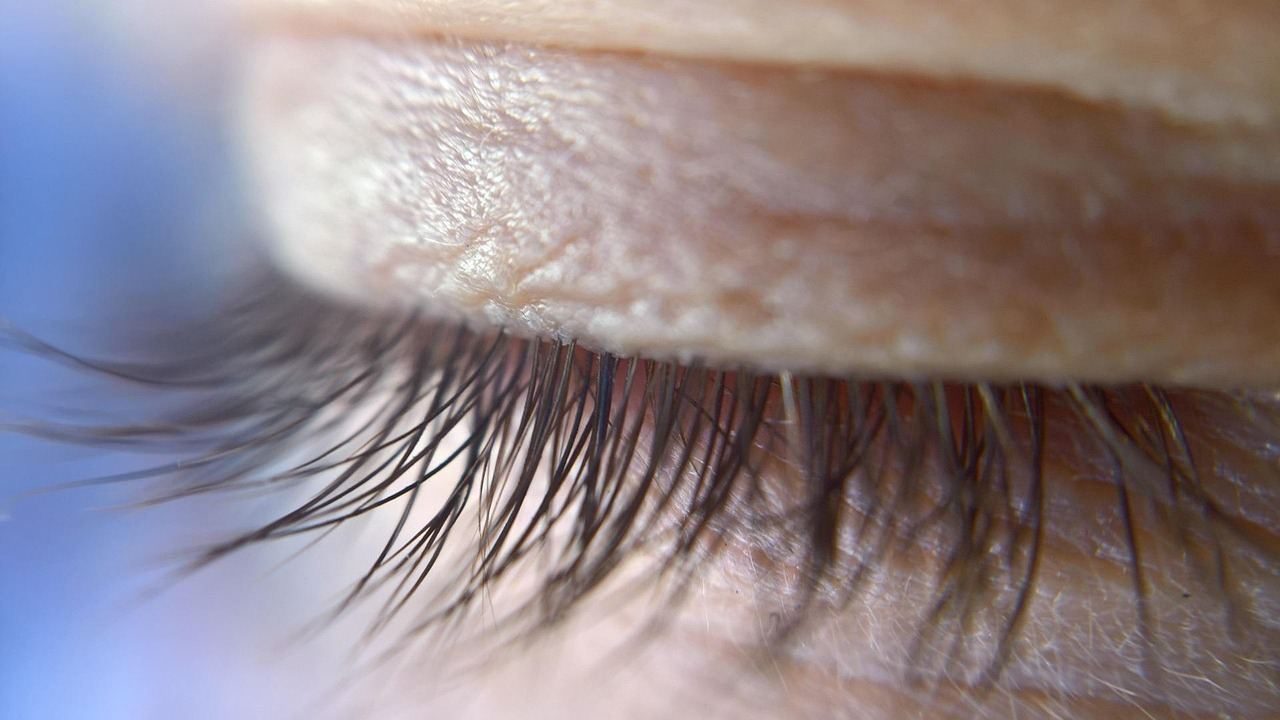
When eyelids quietly drive the problem
Sometimes the issue isn’t the eye surface alone, but the system supporting it.
The eyelids play a crucial role in keeping tears stable.
If the tiny oil glands along the lid margins don’t function well, tears evaporate too quickly.
People in this situation often notice:
- irritation along the eyelid edges,
- a gritty or “dirty” feeling in the morning,
- burning that’s worse after sleep than during the day.
In these cases, drops alone rarely change the overall pattern, because the surface keeps losing protection night after night.
Allergy and irritation: not always obvious
Allergy doesn’t always announce itself loudly.
Sometimes it shows up as quiet, repeated irritation.
Something in the environment affects the eyes overnight, and the burning in the morning is simply the end result.
A subtle clue is itching that comes before burning.
Another is the urge to rub the eyes — something that usually feels good for seconds and makes things worse for much longer.
Why this becomes more noticeable with age
This isn’t about something suddenly breaking.
It’s about margin.
Earlier in life, the eyes often tolerate dryness, long screen use, and poor sleep without protest. Over time, that buffer shrinks.
Tear stability decreases, eyelid function changes, and recovery becomes slower.
So the same conditions that once went unnoticed now show up as symptoms — especially in the morning.
Sensitivity increases. Control doesn’t disappear.
When burning is a warning, not just discomfort
Most morning eye burning is uncomfortable but harmless.
But when it comes with pain, strong light sensitivity, discharge, or changes in vision, guessing stops being useful.
Those signs deserve medical evaluation.
When eyes burn in the morning in a persistent or worsening pattern, it’s reasonable to treat that as a signal to get a proper eye exam instead of repeating trial-and-error.
Final thoughts
Morning eye burning isn’t random, and it isn’t all the same.
What matters most isn’t how sharp the sensation is, but how your eyes recover from it.
Quick recovery points to mild stress.
Slow or unreliable recovery points to a surface problem that needs attention.
Once you recognize which morning you’re living in, the symptom stops being mysterious — and becomes manageable.
This article is for informational purposes only and does not replace professional medical advice. If symptoms are severe, persistent, or worsening, seek qualified medical care.
Related Articles
- Sleep After 40: What’s Normal and What’s a Problem
- Bad Sleep After 40: Causes and What to Do
- Sleep Schedule by Age: Why It Changes and What You Can Do
- Why Do I Wake Up Tired?
- Morning Fatigue Causes: Why You Wake Up Tired and How to Fix It
FAQ
Is it normal if eyes burn in the morning but feel okay later?
Yes. This pattern often points to overnight dryness or surface instability that improves once blinking and tear flow resume.
Can a fan or heater really cause burning eyes on waking?
Yes. Airflow aimed at the face can increase evaporation for hours during sleep and irritate the eye surface by morning.
Do I need antibiotics if my eyes burn in the morning?
Not usually. Burning alone most often reflects dryness or irritation. Antibiotics are used when an infection is confirmed by a clinician.
When should I stop guessing and get checked?
If you have pain, strong light sensitivity, discharge, vision changes, or a persistent pattern that doesn’t improve, seek medical evaluation.
If you want more practical 40+ friendly guides like this, browse Life After 40 and save this article for the next time the symptom repeats.
Author Bio
Roman Kharchenko writes practical, real-life health and lifestyle guides for people 40+ at Life After 40.